
You wake up with a throat that hurts every time you swallow. By lunch, you have a fever. Then you remember someone at home or work recently had strep. Is it time to get tested?
Most sore throats are caused by viruses, but a sore throat that starts suddenly, especially with fever or a recent strep exposure, is worth discussing with a healthcare provider. Here’s what to look for, what a throat swab can tell you, and what to do if you still feel sick after a negative test.
Key takeaways
- Sudden throat pain, fever, and tender neck glands can raise suspicion for strep.
- A cough, runny nose, or hoarse voice more often points to a virus.
- White patches on your tonsils can occur with strep, but looking at your throat can’t confirm the diagnosis.
- Follow-up after a negative rapid strep test can differ for children and adults.
- If symptoms get worse or don’t start improving within a few days, contact a healthcare provider
What Does Strep Throat Feel Like?
Strep throat is an infection caused by group A Streptococcus bacteria. It can cause a sore throat that comes on quickly, pain when swallowing, fever, tender glands at the front of the neck, and red or swollen tonsils. Some people have white patches on their tonsils, but those patches alone don’t tell you what’s causing the infection.
Think about what’s happening alongside the sore throat. If you’re also coughing, blowing your nose, or losing your voice, a virus is more likely. If throat pain and fever are the main symptoms, especially after close contact with someone who has strep, call your provider to ask whether testing makes sense.
When Should You Get a Sore Throat Checked?
Consider calling for an evaluation if your sore throat starts suddenly with a fever, follows a known strep exposure, or comes with a rash. It’s also worth checking in if symptoms worsen or don’t start improving within a few days. Tell your provider when the pain started, whether you’ve had a fever, and whether you’re able to drink fluids.
What Does a Negative Rapid Strep Test Mean?
A rapid strep test uses a throat swab to look for group A strep. A positive result can confirm strep throat. A negative result means the test didn’t detect it, but the next step depends in part on the patient’s age.
- For children age 3 and older with symptoms: The CDC recommends a follow-up throat culture after a negative rapid antigen test because the rapid test can miss some infections.
- For adults: A follow-up culture usually isn’t needed. If you’re getting worse or still aren’t improving after a few days, call your provider. A negative strep test doesn’t explain what else might be causing your sore throat.
If It Is Strep, What Happens Next?
Confirmed strep throat is treated with antibiotics. The right antibiotic can shorten the illness, reduce the chance of spreading it, and lower the risk of complications. Antibiotics don’t help a sore throat caused by a virus. If you’re prescribed antibiotics and aren’t feeling better after 48 hours, contact your provider.
Strep Testing and Sick Visits in Amarillo
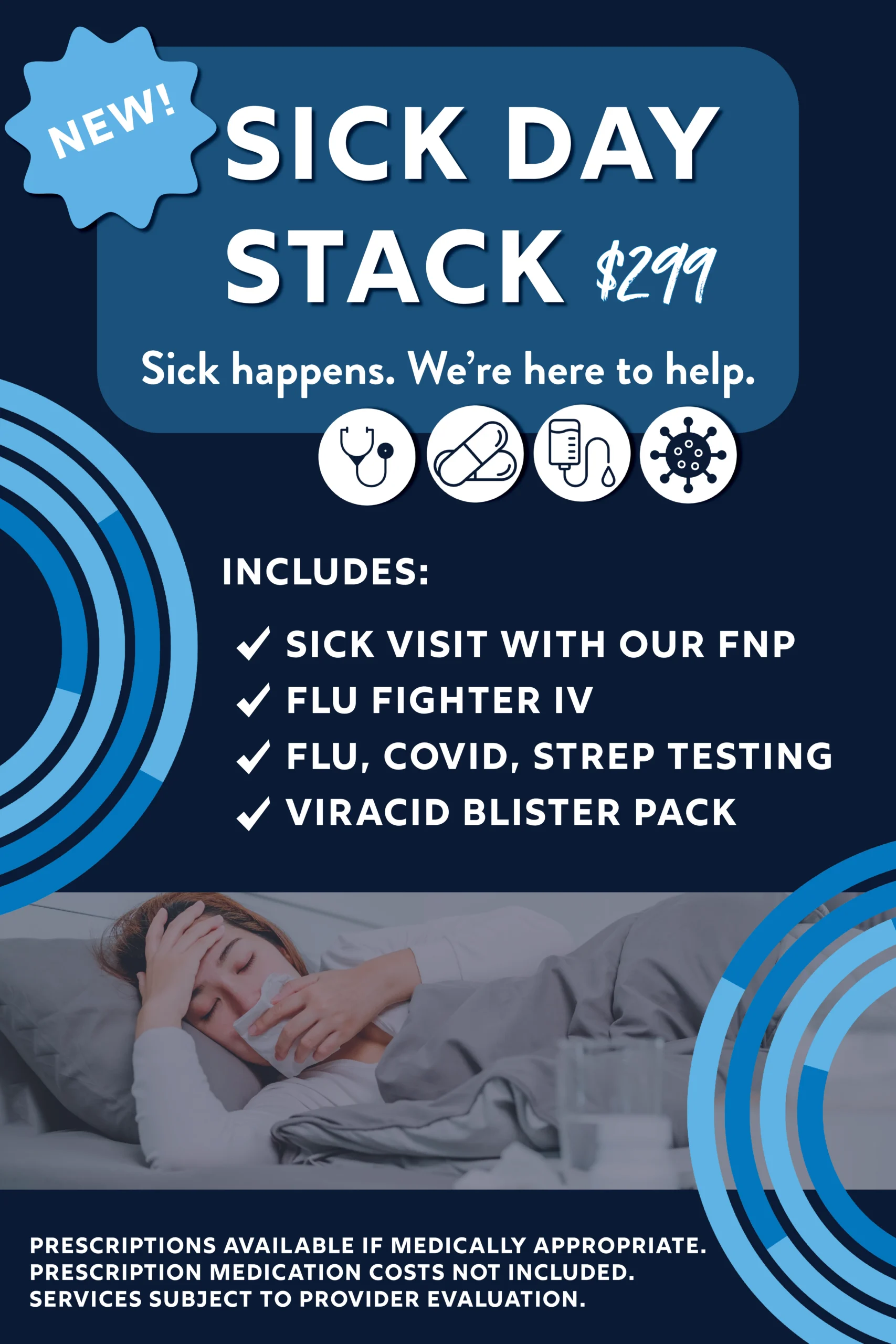
If you’re unsure whether your sore throat needs testing, start with a sick visit at IVRS Wellness Center in Amarillo. Erin Montgomery, FNP, can review your symptoms and health history, determine which tests are appropriate, and explain your next steps. The Sick Stack is also available for patients who want to ask about the full package.
Call 806-322-0747 to ask about a sick visit, or explore strep testing and Sick Stack options in Amarillo.

Frequently asked questions
Can adults get strep throat?
Yes. Strep is more common in school-age children, but adults can get it too, especially after close contact with someone who has it.
Can I tell if I have strep by looking at my tonsils?
No. Redness, swelling, and white patches are clues, but they don’t confirm strep. Your provider can decide whether you need a throat swab.
When can I go back to work or school after strep?
CDC guidance is to stay home until your fever is gone and you’ve taken an appropriate antibiotic for at least 12 to 24 hours. Ask your provider what timing applies to you.
Reviewed by IVRS Wellness Center
Erin Montgomery, FNP
This article was medically reviewed by the IVRS Wellness Center provider team to help ensure the information reflects current clinical knowledge and supports informed patient education. This content is intended for educational purposes only and should not replace personalized medical advice, diagnosis, or treatment. Always consult a qualified healthcare provider regarding your individual health needs.