
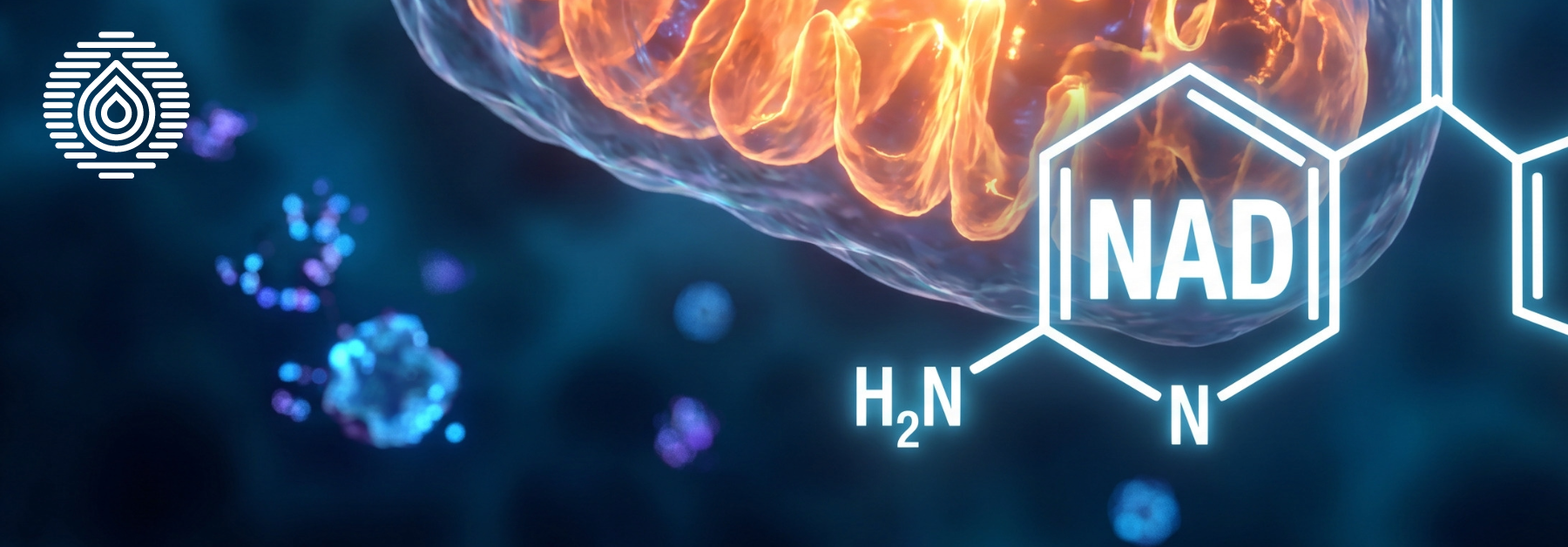
NAD+ has become one of the most recognizable names in wellness, often connected to energy, recovery, mental clarity, and healthy aging. But popularity can make it difficult to separate what NAD+ does naturally in the body from what has actually been established about NAD+ therapy. Before scheduling an infusion or injection, it is important to understand the science, the limitations, the possible side effects, and why provider guidance matters.
What does NAD+ do in the body?
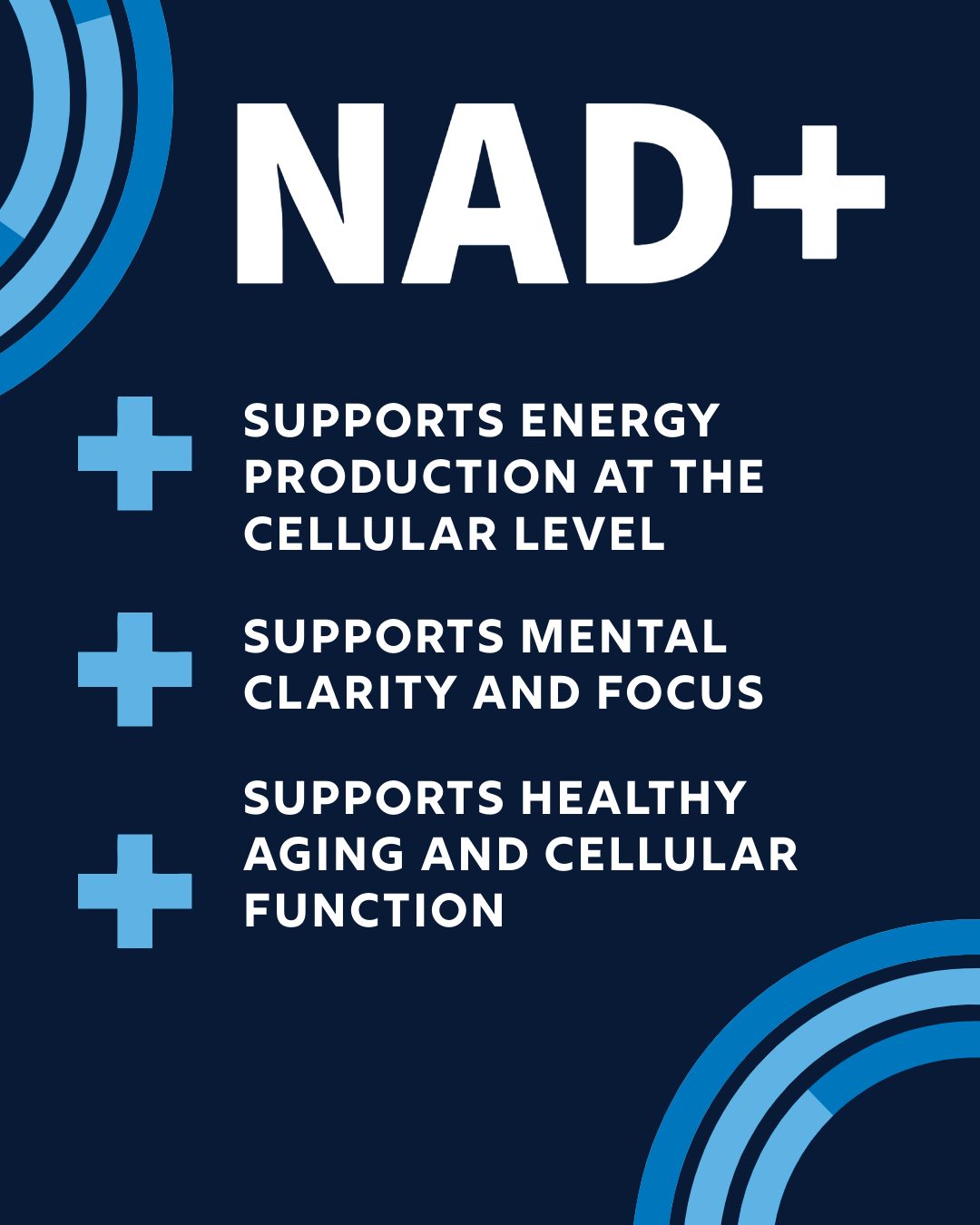
Nicotinamide adenine dinucleotide, or NAD+, is a coenzyme found in every living cell. It helps enzymes carry out reactions involved in converting nutrients into usable cellular energy. NAD+ also participates in processes related to cellular signaling, DNA maintenance, and the body’s response to metabolic stress.
NAD+ levels and metabolism can be influenced by age, illness, nutrition, activity, sleep, and other factors. This biological role is one reason NAD+ has attracted so much attention. However, knowing that NAD+ is essential inside cells does not automatically prove that receiving additional NAD+ by IV or injection will produce a particular health outcome.
What does research say about NAD+ therapy?
Human research on NAD+ biology is growing, but much of the clinical literature focuses on oral NAD+ precursors—such as nicotinamide riboside, nicotinamide mononucleotide, niacin, or nicotinamide—rather than on intravenous NAD+ itself. These products and routes of administration should not be treated as interchangeable.
A 2023 systematic review found that NADH and NAD+ precursors were generally tolerated in the small studies reviewed, but the trials involved different products, populations, and outcomes. A 2026 retrospective pilot study of commercially administered IV NAD+ provided preliminary information about short-term tolerability, but it was not designed to establish broad effectiveness. Larger, well-controlled studies are still needed to determine which people may benefit, which goals are realistic, and what dosing or treatment schedules are appropriate.
In other words, NAD+ therapy may be explored as part of an individualized wellness plan, but it should not be presented as proven to reverse aging, cure chronic illness, guarantee more energy, or create the same result for everyone.

Why should NAD+ therapy begin with a health review?
Low energy, brain fog, slower recovery, and feeling “off” can have many possible causes. Sleep problems, stress, dehydration, nutritional deficiencies, anemia, thyroid conditions, hormone changes, medication effects, and other concerns can produce similar symptoms. Starting with your health history and goals helps the IVRS team consider whether NAD+ therapy is reasonable or whether another evaluation or service may be more appropriate.
Tell the team about your medical conditions, allergies or sensitivities, prescription medications, supplements, pregnancy or nursing status, and any previous reaction to an infusion or injection. Do not stop or change a medication unless the prescribing clinician directs you to do so.
What can NAD+ therapy feel like?
The experience varies by the route, dose, infusion rate, and individual. During an NAD+ infusion, some people may experience nausea, abdominal discomfort, flushing, headache, lightheadedness, an increased heart rate, or pressure or tightness in the chest. A recent real-world pilot study reported gastrointestinal symptoms, increased heart rate, and chest pressure among some IV NAD+ recipients; symptoms resolved when the infusion ended, but the findings reinforce the importance of clinical monitoring.
If you feel uncomfortable during an appointment, tell the IVRS team immediately. The clinical staff can assess your symptoms and determine the appropriate response, which may include adjusting or stopping the infusion. A stronger sensation is not evidence that a therapy is “working,” and a faster or higher dose is not automatically better.
Why do sourcing and sterile preparation matter?
Injectable and intravenous products bypass many of the body’s natural barriers, so ingredient quality and sterile preparation are especially important. The U.S. Food and Drug Administration has warned compounders not to use food-grade NAD+ ingredients to prepare sterile drugs. The agency has received reports of severe chills, shaking, vomiting, and fatigue following injectable NAD+ products associated with excessive endotoxin exposure.
Compounded drugs are not FDA-approved, meaning the FDA does not review them for safety, effectiveness, or quality before they are marketed. Patients should feel comfortable asking whether a product is compounded, where it comes from, how it is prepared, and what safeguards are used. These questions are part of responsible care—not an inconvenience.
What NAD+ options are available at IVRS?
IVRS Wellness Center offers NAD+ infusions and injections, allowing the clinical team to discuss options based on your goals, health history, preferences, and the amount of time you have available. NAD+ services are available through the Amarillo and Lubbock locations, and provider consultation is required for any NAD+ to be prescribed and shipped.
The best choice is not necessarily the largest dose or the most intensive format. Your IVRS team can explain the available options, expected appointment experience, current pricing, and any preparation instructions before you begin.
What should you ask before scheduling?
Why might NAD+ therapy be considered for my particular goals?
What results are realistic, and what remains uncertain in the research?
Which option and dose are being recommended, and why?
What side effects should I report during or after my appointment?
Is the product compounded, and what can you tell me about its source and preparation?
How will we decide whether continuing NAD+ therapy makes sense for me?
NAD+ therapy in Amarillo and Lubbock
If you are curious about NAD+ therapy, the next step is a conversation—not a promise of a predetermined result. The IVRS team can review your goals, explain the infusion and injection options, and help determine whether NAD+ fits into your broader wellness plan. Contact IVRS Wellness Center in Amarillo or Lubbock to learn more or schedule an appointment.


Frequently asked questions
What is NAD+ therapy?
NAD+ therapy refers to the administration of nicotinamide adenine dinucleotide, commonly by IV infusion or injection. NAD+ is a coenzyme involved in cellular energy and other biological processes, but clinical benefits from supplemental NAD+ are still being studied.
How long does an NAD+ infusion take?
Appointment length can vary with the dose, individual tolerance, and infusion rate. NAD+ is sometimes administered more slowly when a patient experiences discomfort. The IVRS team can explain the expected timing for the option recommended to you.
Are NAD+ infusions and injections FDA-approved?
NAD+ infusion and injection products used for wellness purposes are not FDA-approved to treat a disease or guarantee a specific outcome. If a product is compounded, the FDA does not review it for safety, effectiveness, or quality before it is marketed.
Can NAD+ therapy cause side effects?
Yes. Reported experiences may include nausea, abdominal discomfort, flushing, headache, lightheadedness, increased heart rate, or chest pressure. Tell the clinical team immediately about any uncomfortable or concerning symptom.
Is NAD+ therapy available in Amarillo and Lubbock?
IVRS offers NAD+ therapy through its Amarillo and Lubbock locations. Contact the location most convenient for you to confirm current options, pricing, appointment requirements, and availability.
Key takeaways
-
NAD+ plays an essential role in cellular energy and other biological processes.
-
Research on IV NAD+ remains limited, and wellness claims should not be treated as guaranteed outcomes.
-
The dose, infusion rate, route, sourcing, and sterile preparation all matter.
-
Patients should report side effects immediately and should not assume that stronger sensations mean better results.
-
IVRS offers NAD+ infusion and injection options in Amarillo and Lubbock with individualized guidance.
Reviewed by IVRS Wellness Center
Erin Montgomery, FNP
This article was medically reviewed by the IVRS Wellness Center provider team to help ensure the information reflects current clinical knowledge and supports informed patient education. This content is intended for educational purposes only and should not replace personalized medical advice, diagnosis, or treatment. Always consult a qualified healthcare provider regarding your individual health needs.



Research and Reference Notes
U.S. Food and Drug Administration. FDA Reminds Compounders to Use Ingredients Suitable for Sterile Compounding. https://www.fda.gov/drugs/human-drug-compounding/fda-reminds-compounders-use-ingredients-suitable-sterile-compounding
U.S. Food and Drug Administration. Consumer and Health Care Professional Information: Compounded Drugs. https://www.fda.gov/drugs/human-drug-compounding/consumer-and-health-care-professional-information
Reyna ME, et al. Intravenous Infusion of NAD+ Versus Nicotinamide Riboside: A Retrospective Tolerability Pilot Study in a Real-World Setting. 2026. https://pubmed.ncbi.nlm.nih.gov/41704678/
Marques C, et al. Evaluation of Safety and Effectiveness of NAD in Different Clinical Conditions: A Systematic Review. 2023. https://pubmed.ncbi.nlm.nih.gov/37971292/
Recent Comments